✎
Label both ends
Every patch lead should carry a label at both ends that matches your cable schedule. It turns a two-hour trace into a two-minute check.
A practical overview of the network concepts that help carry video, audio, control and management traffic predictably.
Before selecting switches or configuring VLANs, document each endpoint, stream direction, resolution, frame rate, codec or transport method, expected bitrate, latency tolerance and redundancy needs. Different AV-over-IP platforms have different requirements; do not assume all products behave alike.
Estimate worst-case traffic on every link, including aggregate streams and uplinks. Account for packet overhead, bursts, control traffic and growth. Confirm that switch backplane, port speed and uplink capacity match the platform's requirements.
Some AV systems use multicast to distribute one stream to multiple receivers efficiently. IGMP snooping helps switches forward multicast only where receivers request it; an appropriately configured querier maintains group membership. Validate vendor-specific recommendations and test joins, leaves and stream changes.
Use VLANs and access controls to segment traffic according to the design. QoS can help prioritize latency-sensitive traffic when correctly marked and consistently configured end to end. Do not treat QoS as a substitute for adequate capacity. Follow enterprise IT security policies and restrict management access.
Document DHCP scopes or static address plans, gateways, DNS needs and any discovery dependencies. Some AV discovery protocols rely on multicast or link-local behaviour that may not cross routed boundaries without additional configuration.
These are general design principles, not a universal switch configuration. Use the specific AV platform's network design guide and coordinate changes with the network owner before deployment.
Good AV-over-IP starts with good physical work. Tap any photo to enlarge it.
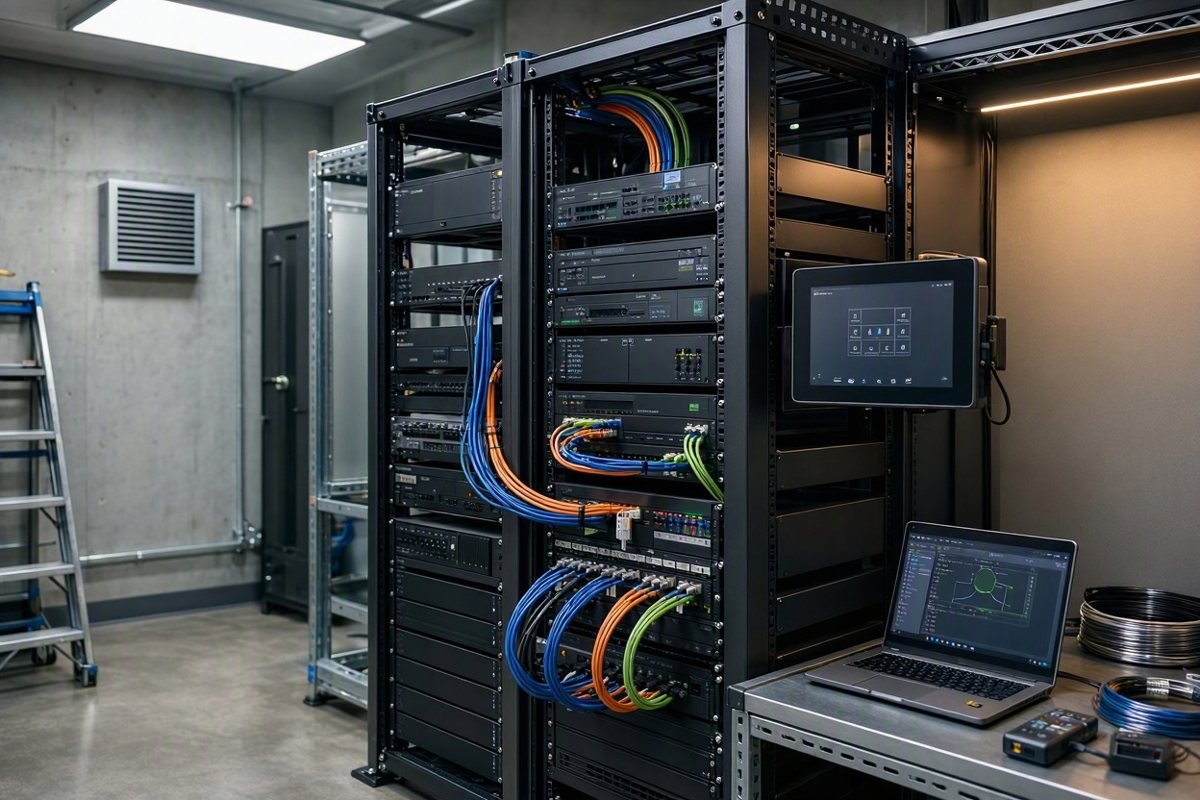
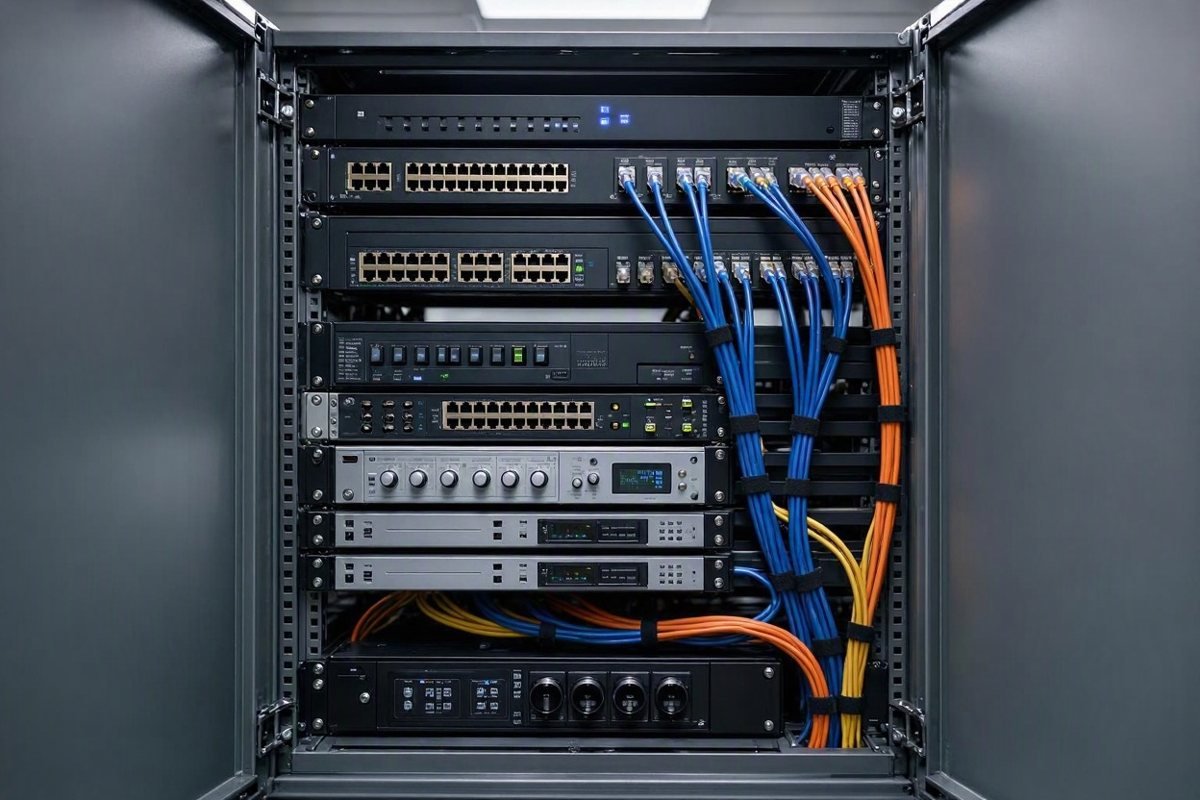
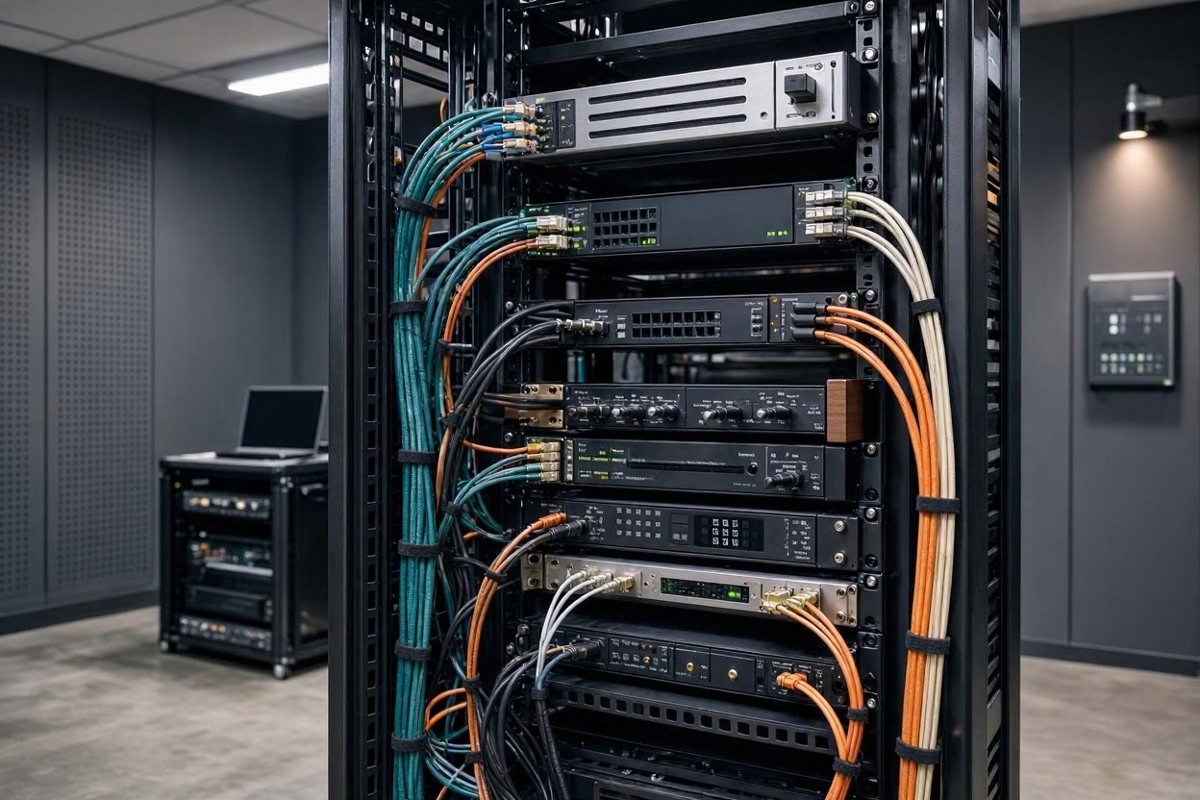
Every patch lead should carry a label at both ends that matches your cable schedule. It turns a two-hour trace into a two-minute check.
Keep video, audio, control and power in separate bundles. This reduces interference and makes later changes safer.
Keep spare ports, a free rack unit or two and a service loop on each cable, so the next change does not mean a rebuild.